Why did my Medicare premium change?
A Roth conversion or investment sale can raise your Medicare premiums two years later. That extra cost is IRMAA (Income-Related Monthly Adjustment Amount), a surcharge on Parts B and D based on your income.
Look back two years
IRMAA uses modified adjusted gross income (MAGI) from two years before the premium year. Roth conversions, capital gains, and tax-exempt municipal bond interest all count toward that income.
The surcharge rises in tiers. Crossing a threshold applies the full surcharge for the next tier, even if your income is only just over the line. The income thresholds change over time; Social Security publishes the current tiers.
Open Tax Analytics in the year with the higher Medicare cost and find IRMAA under Taxes. Then move two years earlier and look at Income for the conversion, gain, or other change behind it.
If you’re already on Medicare when your plan starts, the first year uses that year’s income for its initial estimate, and the second uses the first year’s income. From the third year onward, both years of the lookback are within your plan.
Compare converting more with paying less for Medicare
Under Optimize > Tax Strategy, choose New Strategy > IRMAA Cliff to target a Medicare income tier. Or add Avoid IRMAA Surcharges as a guardrail to another target, such as a tax bracket. Set up a Tax Strategy explains how the target and guardrails work together.
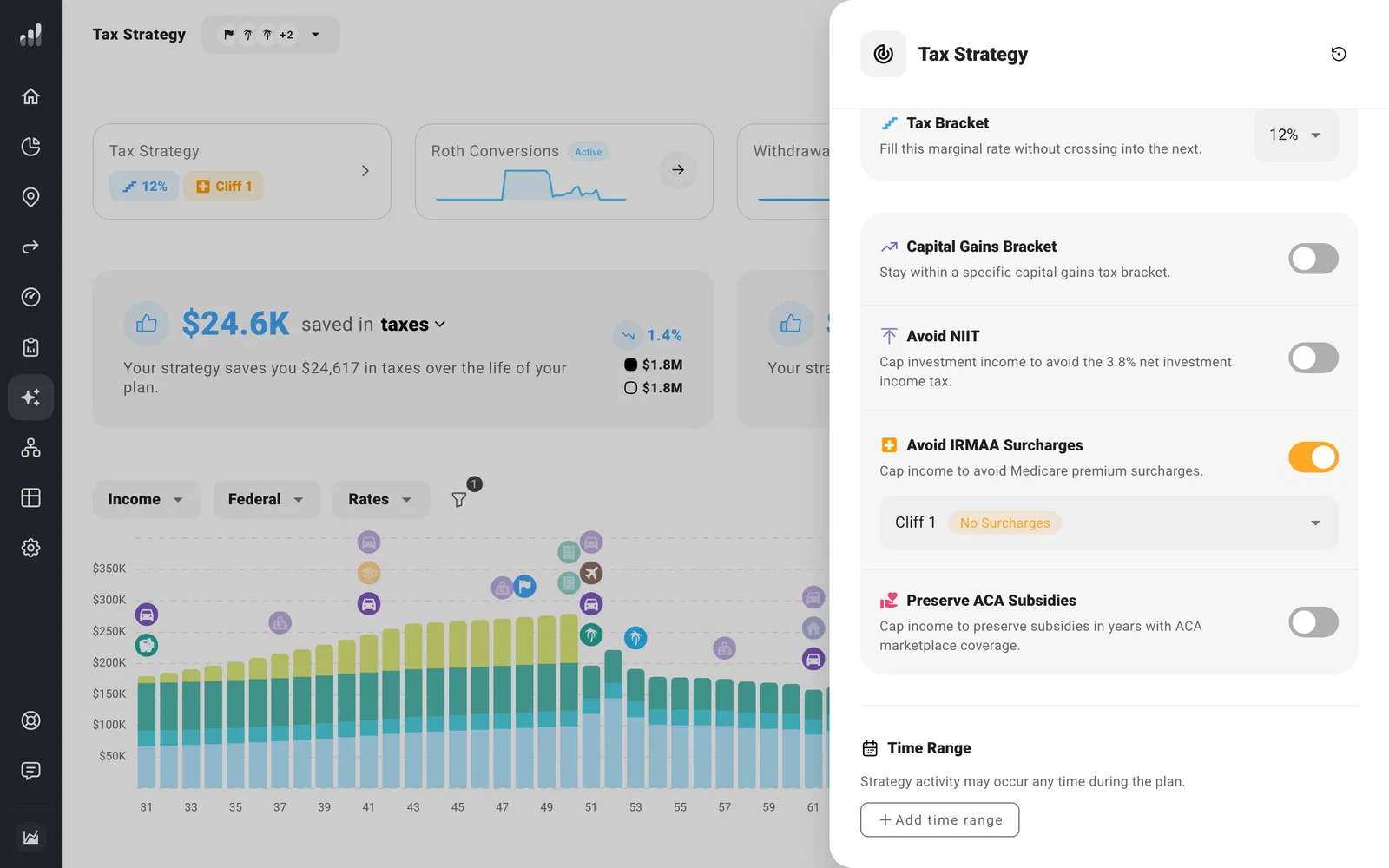
Compare the Medicare cost with lifetime taxes and what you leave behind. A smaller conversion can avoid a surcharge now while leaving more pre-tax savings to withdraw later.
The Medicare expense’s Estimated Annual Cost shows premiums before IRMAA. For the base premiums, supplemental coverage, and enrollment date, open Plan for Medicare costs.
Next: Compare tax strategies
