Set growth and inflation rates
A plan that works with strong investment growth might look very different with slower growth or higher living costs. Your growth and inflation rates let you test both.
Go to Settings > Rates to set the rates for your plan.
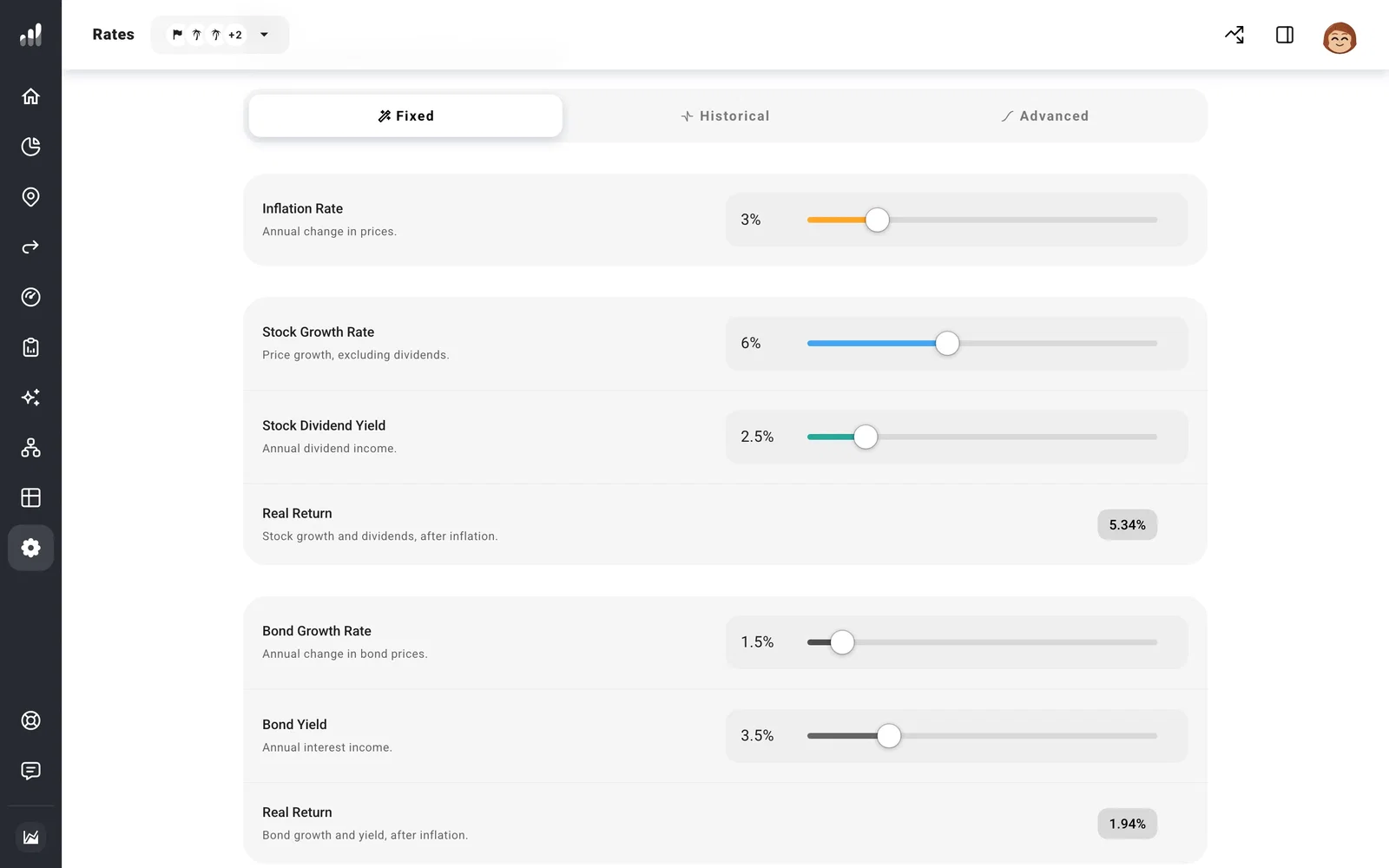
Start with steady rates
Fixed uses the same rates each year. It gives you a clear starting point for seeing whether your income, savings, and spending fit together over time.
Choose rates that reflect the investments and costs you’re planning for. Stock growth is the change in price; dividends are entered separately. If you’re using an expected total stock return, separate those two parts so you count each once. Bond growth and yield have their own rates too.
Try lower growth and higher inflation in Compare > What If. You’ll see how much your plan depends on those assumptions before changing your saved plan. A lower growth rate gives you a more cautious forecast; Chance of Success tests how changing market returns affect it year by year.
Try a sequence of good and bad years
Historical follows past returns and inflation, starting in the Start Year you choose. This lets you see what happens if difficult market years arrive early in retirement, when you’re starting to withdraw. Loopback Year chooses where the sequence begins again after the available history ends. The modifiers let you raise or lower the rates while keeping that sequence.
The history uses US stock, bond, and inflation data, including for plans based in other countries.
For a path you choose yourself, select Advanced, then Edit beside a rate. You can add a temporary inflation spike or a period of slower growth with Change Over Time.
Benefits and individual accounts
Benefit COLA Modifier changes how supported government benefits grow relative to inflation. At 0%, they keep up with inflation. A positive or negative modifier makes their future increases faster or slower, while keeping the starting benefit amount the same.
These rates apply across your plan. An account with its own growth or yield setting keeps it. For reinvesting dividends and choosing where to hold bonds, see dividends and bonds.
