Use Textbook Withdrawals
How would your retirement look if you followed the 4% rule, or adjusted spending after a bad market? Textbook Withdrawals lets you try those approaches with your own portfolio.
We recommend using a copy of your plan so you can compare the strategy with the way you expect to spend.
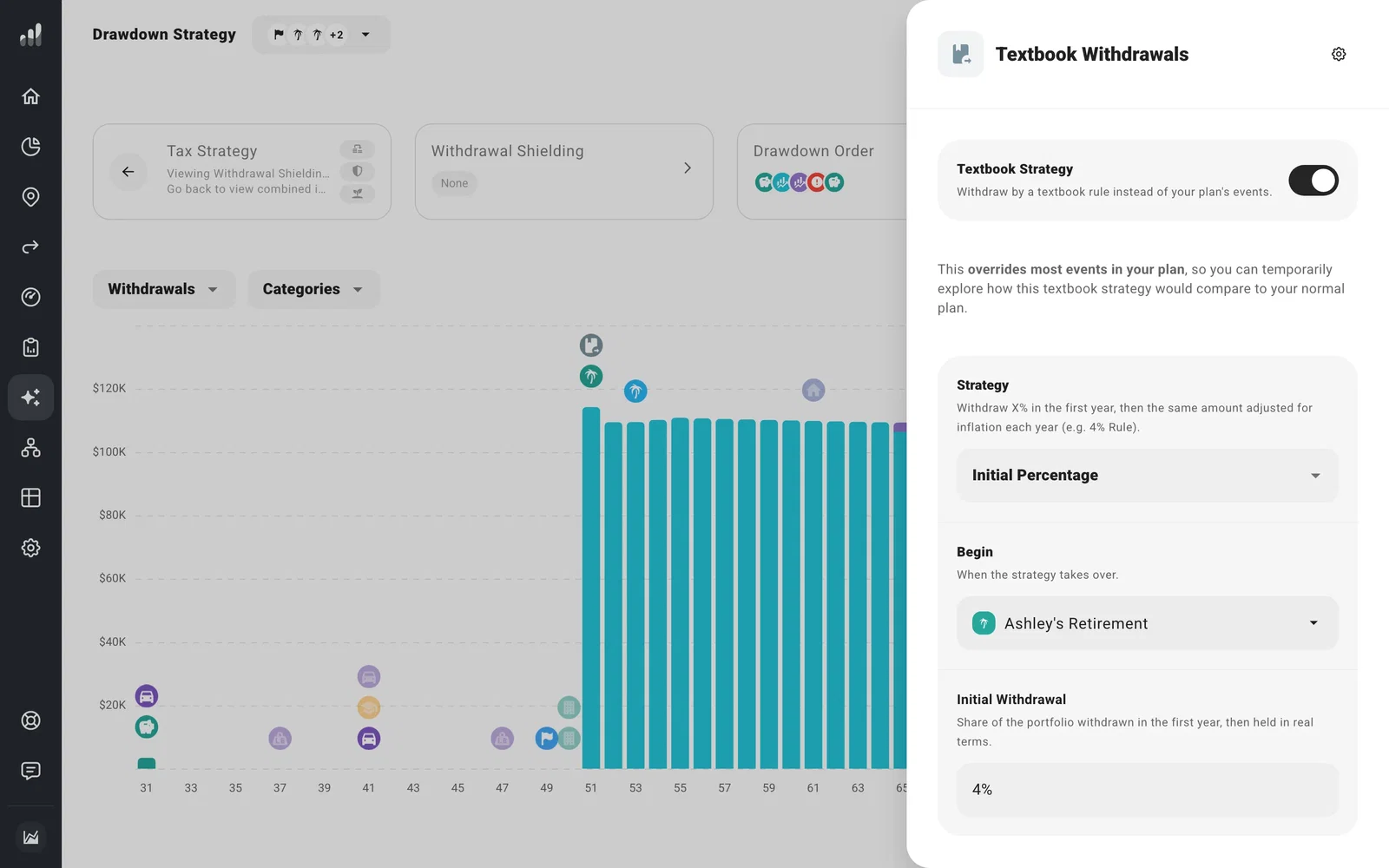
Open Optimize > Drawdown > Textbook Withdrawals and turn on Textbook Strategy. Choose a strategy and set Begin to when you want it to start. It follows your retirement milestone by default.
Keep spending steady
The classic 4% rule starts with a percentage of your portfolio, then adjusts that amount for inflation each year. Select Initial Percentage and enter the starting rate you want to test. Spending keeps its purchasing power even after a bad market, which can put more pressure on the portfolio.
If you already have an annual amount in mind, choose Fixed Amount instead. You can keep it fixed or adjust it for inflation.
Let spending follow your portfolio
Fixed Percentage takes the same percentage of your current portfolio each year. Spending falls when the portfolio shrinks and rises when it grows.
With Variable Percentage Withdrawal (VPW), the percentage depends on your remaining plan years and stock/bond allocation. It takes a larger share as the end of the plan approaches.
For an even split across your remaining years, 1 / YearsRemaining divides the current portfolio by the years left in your plan. The amount is recalculated each year as your balance and remaining time change.
Adjust spending with rules
Ratcheting Safe Withdrawal Rate starts like Initial Percentage, then raises spending when your portfolio grows enough to meet the threshold you set. The higher spending floor stays in place after the increase.
To soften a sudden spending cut, Clyatt 95% Rule sets a floor based on the previous year’s withdrawal. You take a percentage of the current portfolio or that floor, whichever is higher. After a large market loss, the withdrawal can take a bigger share of what’s left.
Guyton-Klinger adds guardrails to an inflation-adjusted withdrawal. Spending is cut when the withdrawal becomes too large a share of the portfolio and raised when it becomes small enough.
Select the info icon next to Strategy for more about the selected rule. For percentage-based strategies, turn on Minimum Yearly Withdrawal or Maximum Yearly Withdrawal to set a spending floor or ceiling.
Include your other income and taxes
Under Planned Income, decide how salary, pensions, and benefits should affect spending. Use them to boost annual spending, reduce portfolio withdrawals, or leave them out to test the portfolio on its own.
Decide whether taxes come out of your withdrawal or on top of it. With Withdraw Strategized Amount, the amount you withdraw covers your taxes and debt payments too. With Spend Strategized Amount, that amount is yours to spend, and your plan withdraws extra to cover taxes and debt payments.
Where did my planned expenses go?
From the start you choose, Textbook Withdrawals replaces ordinary spending with a Withdrawal Strategy expense. It also sets aside property purchases and sales, transfers, and the usual required minimum distributions (RMDs) from your accounts. Turning it off brings your planned events back.
Your drawdown order still decides which accounts fund the withdrawals.
Next: Run Chance of Success
